Brazilian Jiu Jitsu for First Responders
Built for police, fire, paramedics and corrections
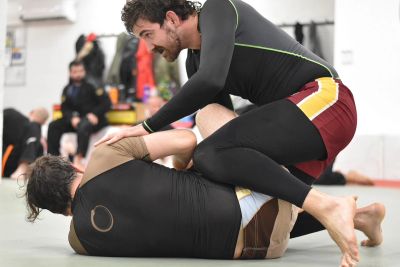
Police officers, firefighters, paramedics, corrections officers and military members train with us every week. Grappling teaches you to control a resisting person safely, protect yourself on the ground and stay calm under pressure, the skills your job asks of you when a call turns physical.
Why grappling matters in your job
Most physical confrontations on the job end up in a clinch or on the ground. Jiu Jitsu and Judo are built for exactly that.
- Control without strikes: pins and positions that let you hold someone safely until help arrives.
- Protect yourself on the ground: escape bad positions, get back to your feet and keep your equipment away from grabbing hands.
- Calm under pressure: live sparring at a safe pace trains your breathing and decision-making when your heart rate is high.
- Fewer injuries: controlling with leverage and position instead of force means safer outcomes for you and the person you're dealing with.
Agencies are recommending it
Police and first responder organizations increasingly point to grappling training as a way to make physical encounters safer.
- The U.S. National Sheriffs' Association's grappling white paper calls for frequent, ongoing grappling training for officers, not just once-a-year refreshers.
- In Marietta, Georgia, police officers trained in jiu jitsu were injured 48% less often during forceful arrests, and the people they arrested were injured 53% less often.
- Closer to home, a 2022 Peel Regional Paramedic Services study found nearly half of its paramedics had experienced violence on the job.
- Canadian policing magazine Blue Line has featured officers calling for Brazilian Jiu Jitsu as the foundation of use-of-force training.
15% off for first responders
First responders get 15% off any membership. Early-morning, daytime, evening and weekend classes fit around shift schedules: Friday at 6 am, Tuesday and Thursday at 10 am, weekday evenings and weekend middays.
How to start
Your first class is free and no experience is needed. Tell your coach you're a first responder when you sign up and we'll apply your discount. Our coaching team includes IBJJF world champions, and every coach has a police vulnerable sector check and NCCP training.